

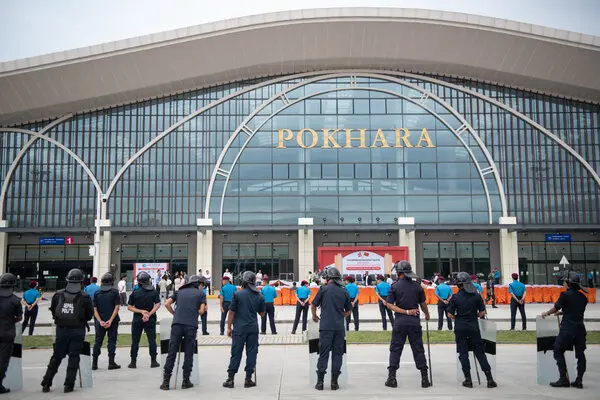
Pokhara International Airport, once promoted as a symbol of Nepal’s aviation future, has now become the center of what investigators describe as the country’s largest single-project corruption scandal.
A parliamentary subcommittee under the Public Accounts Committee (PAC) has found massive irregularities and possible graft in the China-funded project, with estimates ranging from nearly Rs 10 billion to around Rs 14 billion in losses to the state.
The airport was built by a Chinese company with a soft loan from China’s Export-Import Bank, at a cost of about 215–216 million US dollars. The project was sold to the public as a gateway for tourism and trade, but critics had long warned about inflated costs and weak oversight. The new report appears to confirm those fears.
According to the probe panel, irregularities occurred at almost every stage of the project. Investigators say the contract price was pushed up without sound justification, taxes were waived in ways that violated rules, and payments were made for work or materials that either did not match market value or were not properly delivered.
One example cited in media reports is a multi-million-dollar payment for transporting soil and pebbles from several kilometers away, even though investigators found no evidence that such soil was brought in as claimed.
The subcommittee has recommended that Nepal’s anti-graft agencies, including the Commission for the Investigation of Abuse of Authority (CIAA) and the Department of Money Laundering Investigation, open full criminal and financial probes. It has also urged the government to suspend top officials such as the Director General of the Civil Aviation Authority of Nepal (CAAN), Pradeep Adhikari, who previously led the project, along with several project chiefs and administrators.
For ordinary Nepalis, the scandal hits at a sensitive time. The state must still repay the large Chinese loan for Pokhara Airport, yet the airport has struggled to attract regular international flights and remains underused. That combination of high debt, low traffic, and now confirmed corruption has strengthened criticism that the project is both a financial burden and an example of poor governance under foreign-funded infrastructure deals.
Economists warn that the case could weaken public trust in major projects and in Nepal’s ability to manage foreign loans transparently. Analysts say it will also be closely watched by Nepalis abroad, many of whom have long questioned whether their remittances and taxes are being used responsibly at home.
Whether the Pokhara inquiry results in strong prosecutions and reforms, or fades like past scandals, will be a key test of Nepal’s anti-corruption commitment in the coming months.
Key sources used:
Public Accounts Committee subcommittee reports and coverage in The Kathmandu Post, MyRepublica, Fiscal Nepal, EPardafas, Deccan Herald, Nepal Monitor, The Annapurna Express, and other regional outlets
Leave a Reply