

Key takeaways
- A PRISMS update dated Jan 8 lists Nepal at Evidence Level 3 in Australia’s student visa evidence framework.
- Evidence levels help decide whether financial and English documents must be submitted at lodgement.
- Students should confirm requirements using the Document Checklist Tool and ImmiAccount checklist.
- The Genuine Student (GS) requirement remains central to Student visa decisions.
- For Nepali applicants, stronger course-fit logic and cleaner funding evidence matter more under Level 3 settings.
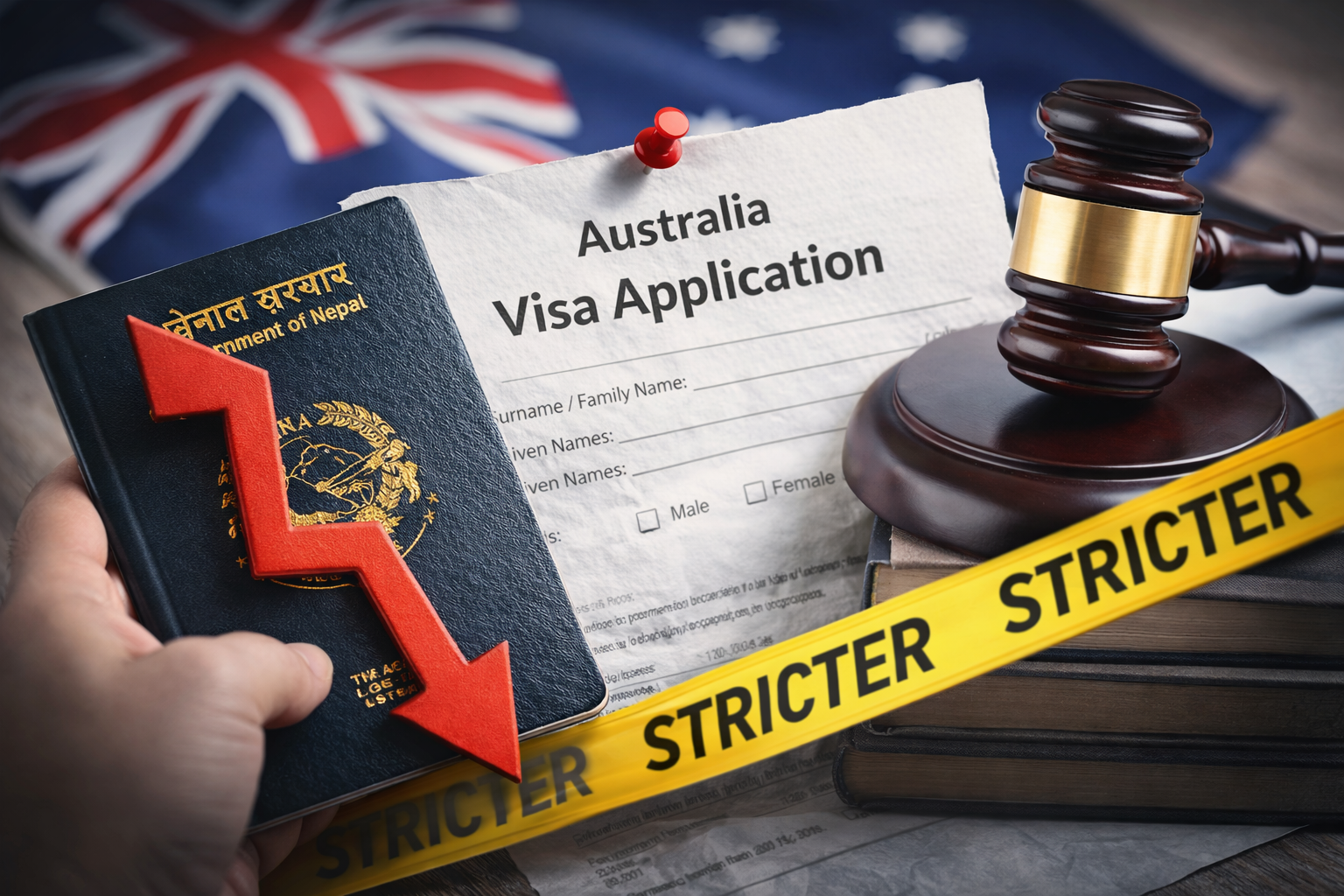
Australia’s Department of Home Affairs has updated the “country evidence levels” used in PRISMS. A notice dated January 8 lists Nepal at Evidence Level 3, after being previously treated as a lower-risk level in the same framework.
Australia uses a combined country and education provider evidence model. In plain terms, the country level and the college or university’s level together decide whether a student must submit proof of finances and English ability at the time they lodge a Student visa (subclass 500) application.
Home Affairs says evidence levels are meant to guide what documents should be attached at lodgement. They do not automatically approve or refuse a visa on their own.
For applicants from Evidence Level 3 countries, the real-world effect is often a stricter checklist. Students are advised to confirm their exact requirements using the Document Checklist Tool and the ImmiAccount document list.
This shift also comes as Australia applies the newer Genuine Student (GS) rule, which replaced the old GTE test. Home Affairs says applicants must show they are genuine entrants and that studying is their main reason for coming.
How this can affect Nepali student applications
If you apply from Nepal in the coming months, Evidence Level 3 can increase pressure in three areas:
- Funding proof and source of money
You may need clearer evidence that tuition and living costs are covered, and that the funds are real and available. Financial capacity is one of the key areas this framework can require at lodgement. - English evidence when requested
If your checklist requires English documents, you are expected to include them with the application, not later. - A believable study plan
Your course choice should match your past education or work, and your future plan should make sense. Home Affairs links student visas to genuine study intent.
What students and parents should do now
- Choose a course that fits your background and career plan, then build your application around that logic.
- Check the Document Checklist Tool early and prepare exactly what it asks for, including translations where needed.
- Keep every document consistent, especially sponsor income, bank records, education history, and timelines.
- Do not assume part-time work will “solve” funding questions. Home Affairs warns students not to depend on work to pay for life in Australia.
- Be smart about the education provider, because the combined model means the provider’s evidence level also affects what you must submit.
Leave a Reply