

Key takeaways
- The new H-1B/H-4 “online presence review” is global, so Nepalis can be affected too.
- India has reported major appointment disruptions, while Kathmandu’s official petition-worker wait time currently shows under 0.5 month.
- Nepal may be lower risk in many periods, but rescheduling and longer processing can still happen.
US consulates have recently tightened vetting for H-1B applicants and H-4 dependents, including an “online presence” review that can require applicants’ social profiles to be publicly visible during processing. This change can increase review time and make appointment schedules less predictable.
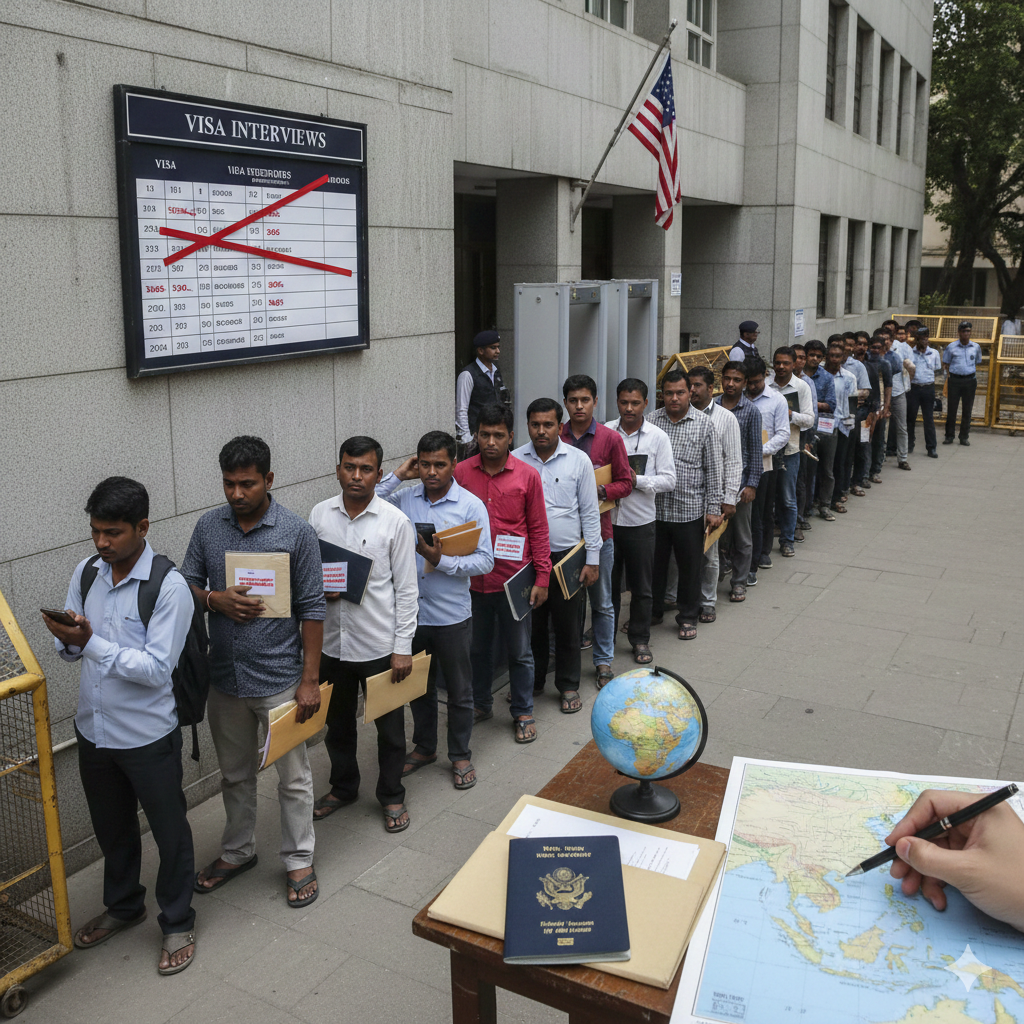
In India, large numbers of applicants have reported cancelled interviews or appointments being pushed out, leaving some workers unable to return to the US on their planned dates. The scale appears linked to workload and how quickly each post absorbs the new screening steps.
For Nepalis, the same scenario is plausible, but it will not necessarily look identical. Nepal has a smaller overall applicant pool, and appointment availability can behave differently than at high-volume posts.
A major dividing line is where Nepali applicants choose to do visa stamping. Nepalis who interview in India for convenience or earlier slots can be directly affected by India’s rescheduling waves and processing slowdowns.
By contrast, applicants processing in Kathmandu may face shorter waits in many periods. Even so, short wait times do not guarantee smooth travel, because posts can still reschedule appointments or take longer in administrative processing when screening workload rises.
Nepali workers already in the US should treat international travel for stamping as a scheduling risk, not a routine errand. Even with a valid approval notice, re-entry typically depends on receiving the visa stamp, which depends on appointment timing and completion of checks.
If disruption increases, the most immediate impact would be personal and operational: missed work start dates, unplanned weeks in Nepal or a third country, and employer disruption for time-sensitive roles. Families on H-4 can face the same uncertainty since they often process alongside the H-1B holder.
What happens next depends on consular capacity and how consistently the new screening is applied across posts. The overall direction is toward more review steps, not fewer, so applicants should plan with buffer time rather than tight return dates.
Comparison: India vs Nepal
- Policy scope: The screening change applies to H-1B and H-4 applicants broadly, not only to one country.
- Volume factor: India processes far more cases, so appointment systems there tend to feel shocks faster and harder.
- Exposure for Nepalis: Nepalis stamping in India are more likely to experience India-style disruptions than those stamping in Kathmandu.
- Still possible in Nepal: Kathmandu can also see slowdowns if staffing, demand, or screening workload shifts.
Practical steps for Nepalis
- Avoid nonessential travel for stamping if your US return date is tight.
- Build buffer time measured in weeks, not days.
- Keep your online presence consistent with your DS-160 and documents if the post requests public visibility.
- Coordinate with your employer on contingency plans if you get rescheduled or delayed.
Leave a Reply