

Key takeaways
- DHS has raised the “self-deport” stipend to $3,000 for undocumented migrants who leave by Dec. 31, 2025.
- The offer includes a free flight and is tied to registering through the CBP Home app and completing departure by year-end.
- DHS says some civil fines may be waived for participants, and the stipend is paid after departure is confirmed.
- Legal experts warn that voluntary departure can trigger reentry bars and other consequences depending on a person’s case.
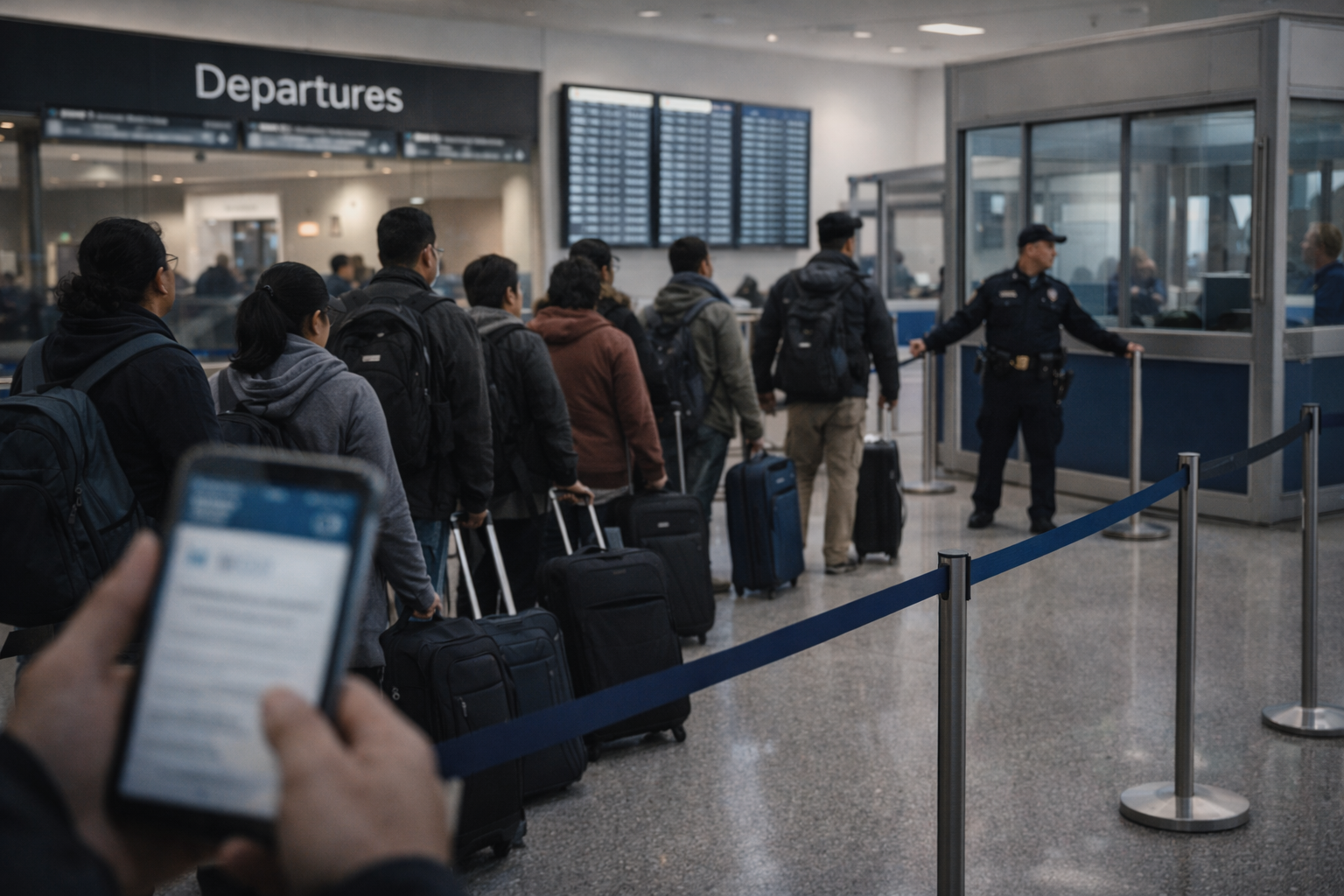
The Trump administration has increased the payment offered to undocumented migrants who voluntarily leave the United States, tripling the “self-deport” stipend from $1,000 to $3,000 for those who register and depart by December 31, 2025, according to the Department of Homeland Security. DHS says the limited-time offer includes a free one-way flight to a person’s home country, but only if they sign up through the CBP Home mobile application and complete the departure by the year-end deadline.
Under the program, migrants are instructed to use CBP Home to signal their intent to leave. DHS has said the stipend is paid after the government confirms the person has departed the United States. DHS has also linked participation to waivers of some civil fines or penalties tied to overstaying or failing to depart, describing the payment and airfare as part of a “holiday” push to speed voluntary departures.
The agency has argued that voluntary departures are cheaper than enforcement removals. DHS previously estimated the average cost to arrest, detain, and remove someone without legal status at roughly $17,000. The $3,000 offer builds on “Project Homecoming,” a broader effort launched in 2025 that promoted app-based voluntary departures with airfare and a $1,000 “exit bonus.” USCIS program materials describe the app process as voluntary self-deportation and note that fines may be forgiven for those who use the system.
CBP Home itself was rolled out in March 2025 as a rebranded version of CBP One, shifting from appointment scheduling under the prior administration to an “Intent to Depart” feature for people in the US without lawful status, according to DHS and a Congressional Research Service summary. DHS has paired the incentive with a warning that those who do not leave voluntarily could face arrest and removal, and Reuters reported the administration is preparing for a more aggressive 2026 enforcement push.
Immigration lawyers and advocates have cautioned that “self-deporting” can carry serious legal consequences, including future bars on reentry that depend on a person’s immigration history. Some have urged migrants to get legal advice before taking any step that confirms unlawful presence or triggers a departure. For Nepali nationals in the US without lawful status, the policy could be relevant because DHS has not limited the offer by nationality in its public descriptions. The practical risk is that leaving the US can change a person’s legal options later, so community members are typically advised to consult a qualified immigration attorney or accredited legal aid provider before acting.
Leave a Reply