

Key takeaways
- Texas has imposed a Texas H-1B visa freeze for many state agencies and public universities.
- The order blocks new H-1B petitions unless the Texas Workforce Commission approves them in writing.
- The freeze runs through May 31, 2027, and requires a statewide H-1B report by March 27, 2026.
- Texas public medical and research institutions rely heavily on H-1B hiring, so they may feel early impacts.
- Nepalis may face fewer sponsored openings at Texas public institutions. Consulates issued 780 H-1B visas to Nepali nationals in FY2024 worldwide.
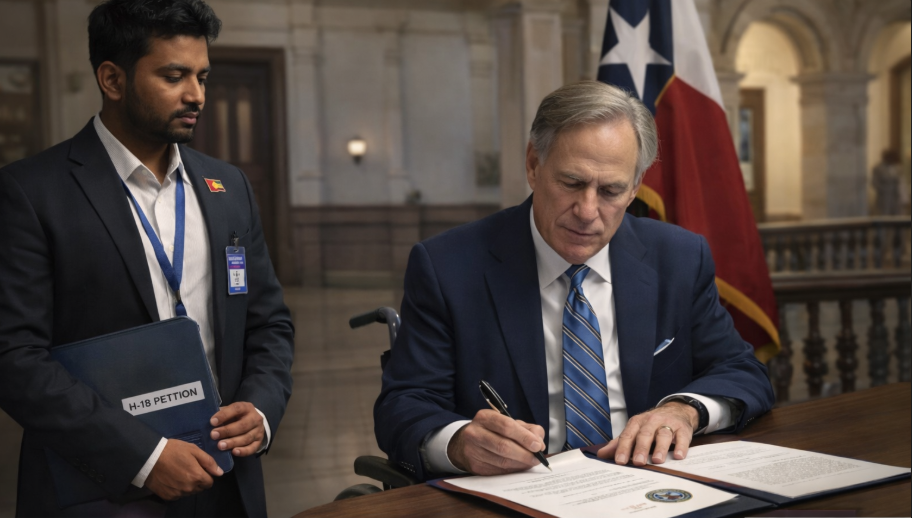
Texas has launched a Texas H-1B visa freeze for many public employers. Governor Greg Abbott has ordered state agencies and Texas public universities to stop filing new H-1B petitions unless they get written approval from the Texas Workforce Commission. The freeze runs through May 31, 2027. The order can affect Nepali professionals in Texas, United States, who seek H-1B jobs at public universities and major public medical centers by slowing or blocking new sponsorship.
Abbott’s directive targets state agencies led by a governor-appointed head and public institutions of higher education.
The order does not change federal immigration law. It changes how certain Texas public employers can sponsor new H-1B hires.
What the Texas H-1B visa freeze does
Abbott directed covered employers to freeze new H-1B petitions immediately. Employers can file only if the Texas Workforce Commission approves the case in writing.
The order sets a reporting deadline too. Agencies and universities must submit H-1B data to TWC by March 27, 2026.
The report must include 2025 counts for new and renewal petitions. It also asks for job categories, visa end dates, and workers’ countries of origin.
Who faces the biggest impact in Texas
The freeze hits employers that rely on global hiring. That includes major Texas public medical and research institutions.
AP reported that UT Southwestern Medical Center had 228 H-1B visa holders. Texas A&M had 214. UT MD Anderson Cancer Center had 171. UT Austin had 169. Texas Tech had 143.
These numbers show the scale of H-1B use in Texas public institutions. They also show where hiring slowdowns can land first.
What it means for immigrants already on H-1B
This Texas H-1B visa freeze does not automatically cancel anyone’s current H-1B status. The order focuses on new petitions by covered public employers.
Still, workers can feel real effects. Some job changes require new filings. Some extensions also trigger new paperwork steps. A stricter employer policy can delay those moves.
A Democratic state lawmaker, Rep. Ramon Romero Jr., warned the freeze could worsen staffing pressures in public services, including healthcare.
What it means for new applicants and future plans
If you plan to apply through a Texas public university or a covered Texas state agency, expect more friction. Some departments may pause sponsorship. Others may try for approval and wait.
If you plan to apply through a private company in Texas, this order does not directly apply. The directive targets state agencies and public higher education. It does not ban H-1B hiring across Texas.
How this can affect Nepalis in the US
Nepalis often use H-1B pathways in research, tech, and healthcare. Texas hosts large public institutions in all three. A hiring freeze in those institutions can shrink job options.
No public document in the directive breaks down how many Nepalis hold H-1B jobs in Texas public institutions. Still, federal visa data offers a signal of potential exposure. U.S. consulates issued 780 H-1B visas to Nepali nationals in fiscal year 2024 worldwide.
That total includes all U.S. employers, not just Texas. But it shows the program matters to Nepali professionals.
Wider pressure on H-1B sponsorship
This Texas action lands during wider scrutiny of H-1B rules and costs. AP reported that a federal proclamation added a $100,000 annual H-1B fee, and legal challenges followed.
Higher costs and tighter rules can push employers to file fewer petitions. Public institutions often feel those pressures first.
Leave a Reply