
Key takeaways
- The U.S. State Department has paused printing and issuing all DV immigrant visas, even if interviews continue.
- Nepalis who already finished interviews cannot fly to the U.S. until the visa is actually issued in the passport.
- People who only submitted DS-260 should keep preparing, but should expect delays because issuance is stopped.
- The pause is tied to a U.S. security review after the Brown University shooting and the killing of an MIT professor, which U.S. officials and reporting have linked to concerns around vetting in the DV pathway.
- DV-2026 has a hard deadline. If a visa is not issued (or status is not approved) by September 30, 2026, DV-2026 benefits end.
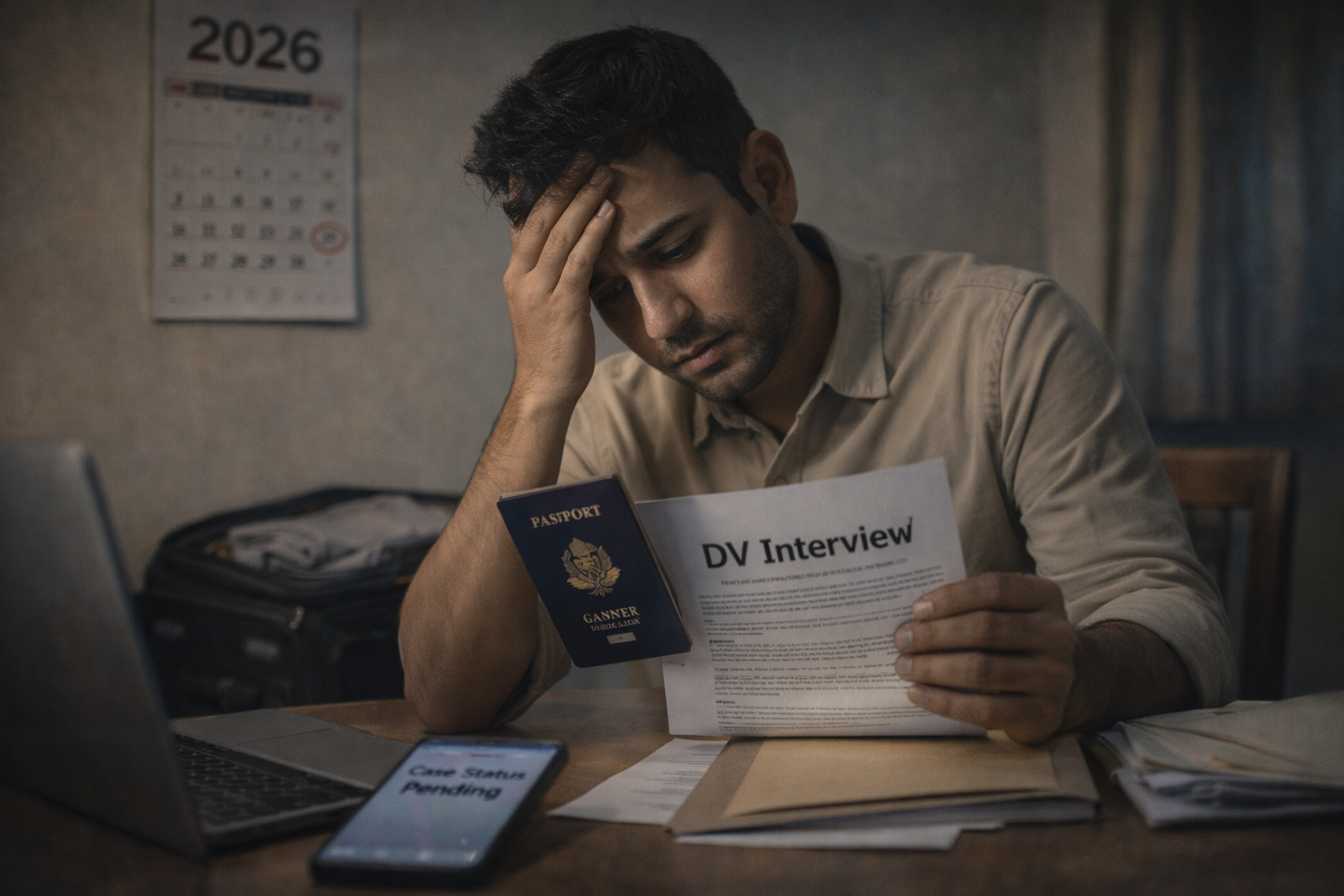
Nepali DV-2026 selectees who have been waiting for a final answer after their embassy interview are now stuck in a new delay. The U.S. State Department has paused issuing Diversity Visas, meaning passports may not get the visa stamp even after an interview is done.
The U.S. guidance says embassies can keep scheduling DV interviews and can keep processing cases, but they will not issue DV visas for now. It also says there are no exceptions.
For people who already interviewed, the most important point is simple. If the DV immigrant visa is not printed and issued in your passport, you cannot travel to the United States as a DV immigrant. Some cases may sit in “approved” or “final checks,” but the visa cannot be issued while the pause continues.
For selectees who have only submitted the DS-260 form and are waiting for an interview date, the advice is to stay ready. Keep collecting documents, finishing translations, and following instructions from the Entrant Status Check and the embassy. But you should expect slower timelines because visa issuing is paused.
U.S. officials have linked this pause to a security review after two major cases in the United States, the shooting at Brown University and the killing of an MIT professor. U.S. reporting has said the government wants to recheck screening steps connected to the DV pathway after those incidents.
There is also uncertainty for some DV selectees who are inside the U.S. and using USCIS for adjustment of status. U.S. reporting has said DHS has also directed a pause that affects DV-related processing through USCIS.
The biggest risk for DV-2026 cases is time. DV-2026 is tied to the U.S. fiscal year. If a DV-2026 visa is not issued, or status is not approved, by September 30, 2026, the case cannot move forward under DV-2026 after that date.
U.S. DV-2026 selection statistics show Nepal has thousands of “prospective applicants,” which includes selectees and eligible family members. That means many Nepali households could be affected if the pause continues for a long time.
For now, the safest approach is to keep your case “ready to finish.” Complete any missing documents quickly, follow embassy instructions closely, and avoid big decisions like quitting your job or selling property until a visa is actually issued.
Leave a Reply